
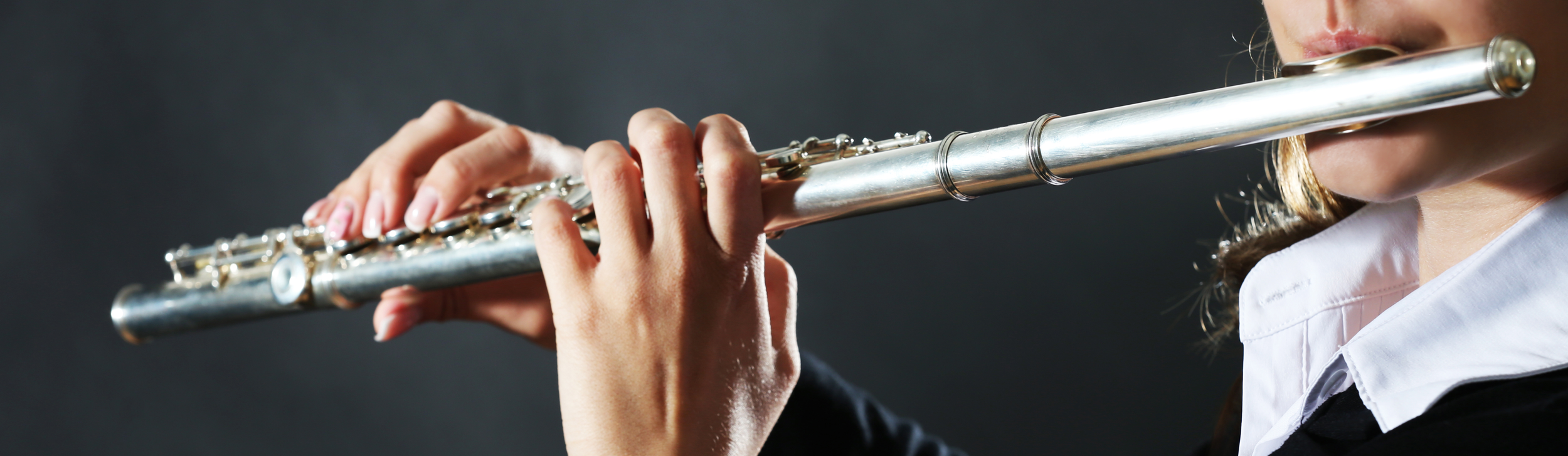
Your local flute teacher
I've had memorable flute experiences. With a music-teaching degree, I played alongside Sir James Galway in London (with his wife), including my favourite, the Tambourin. In the mid-80s I kept up with his Presto by playing along with his records. I’ve recorded with the Meridian Wind Band and once played flute in a tall ship's crow's nest at sea.
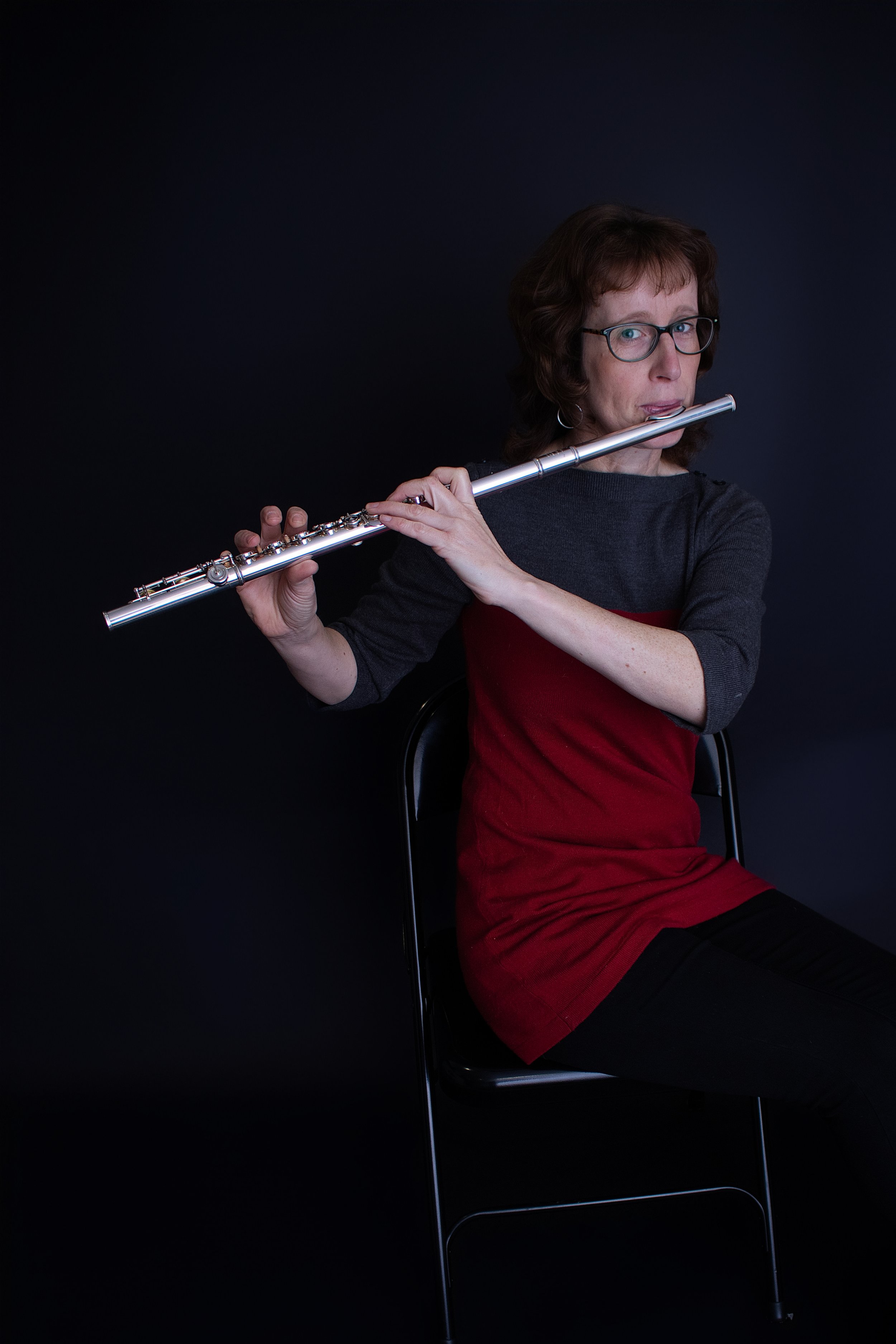
Group Flute Lessons
Playing with others is a great way to socialise and meet people with shared interests. Our structured, small-group sessions teach parts suited to different abilities to develop your skills in a supportive setting. This adult summer camp is ideal for staycations—fun guaranteed, but no American Pie incidents, please!
90 minute sessions (including a brief refreshment break at half time) gives you plenty of time to see your own progress. £100 set of 4 sessions
10:45am -12:15pm Weekly sessions, starting Wednesday 1st July 2026
Basics & Beyond - For players who’ve mastered basic notes and started reading music. Small supportive classes (min 3). Focus: fingering, tone, pitch, sight-reading confidence, ensemble playing and we’ll make a few simple recordings to share.
Intermediate — For confident readers of notes within the stave, Grade 2 - 5. Covers anacrusis, grace notes (acciaccatura, appoggiaturas), trills, mordents and French tonguing, discussions on challenging rhythms, tone developments and high note pitching — new or refresher material tailored to varying levels.
One-to-one Flute Lessons
I am a flute teacher who offers 1-1 flute lessons for all ages. The flute is a small versatile instrument, it’s small light size makes it very easy to transport to and from work, school or to take it on holiday with you. The price point is great with affordable option available, to get you started, that won’t break the bank.
Can we tempt you? Join our flute community
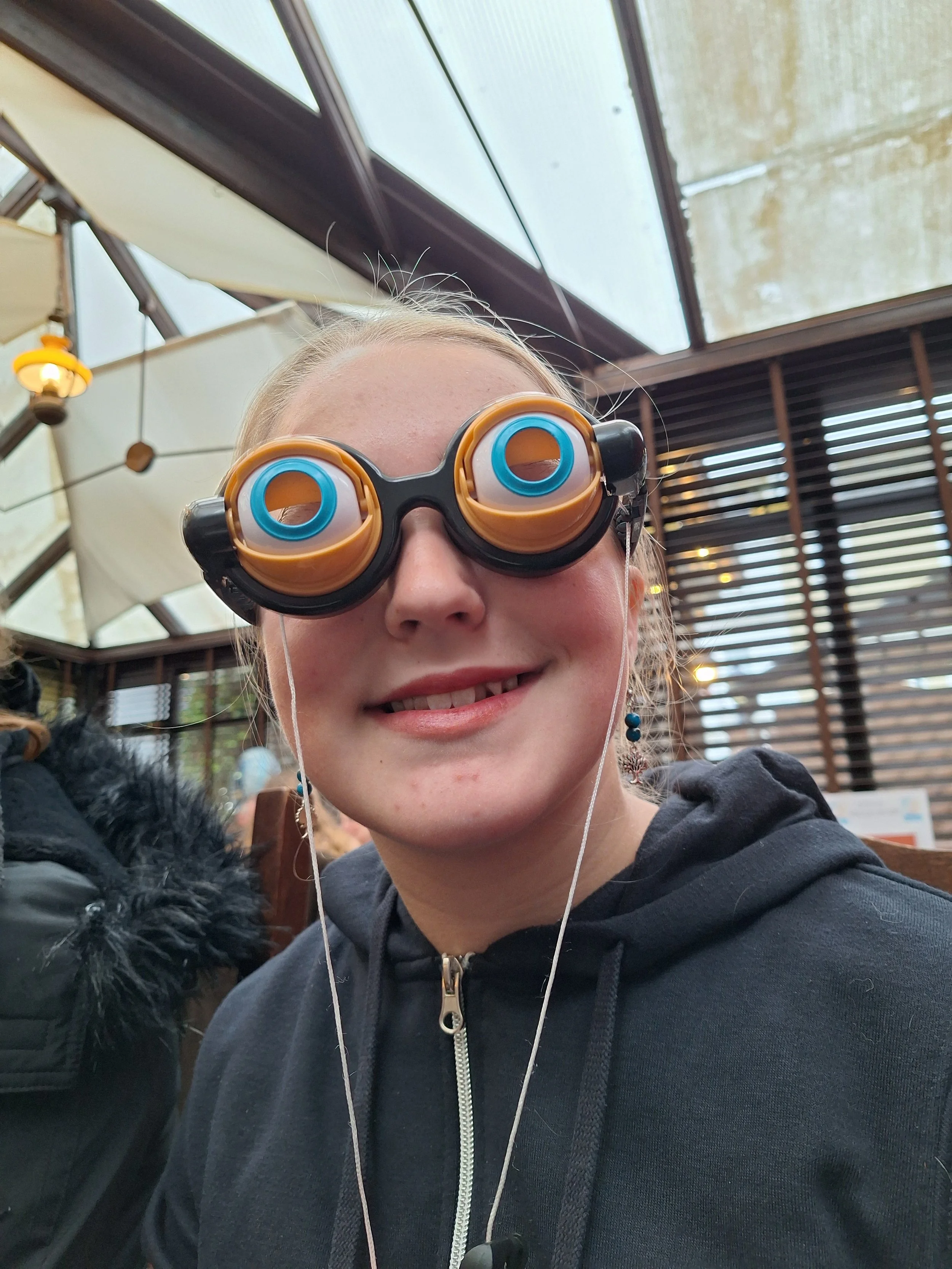
Joining Adult Social Sessions with mum ‘coz adults aren’t all boring’
Free community teacher lead flute choir
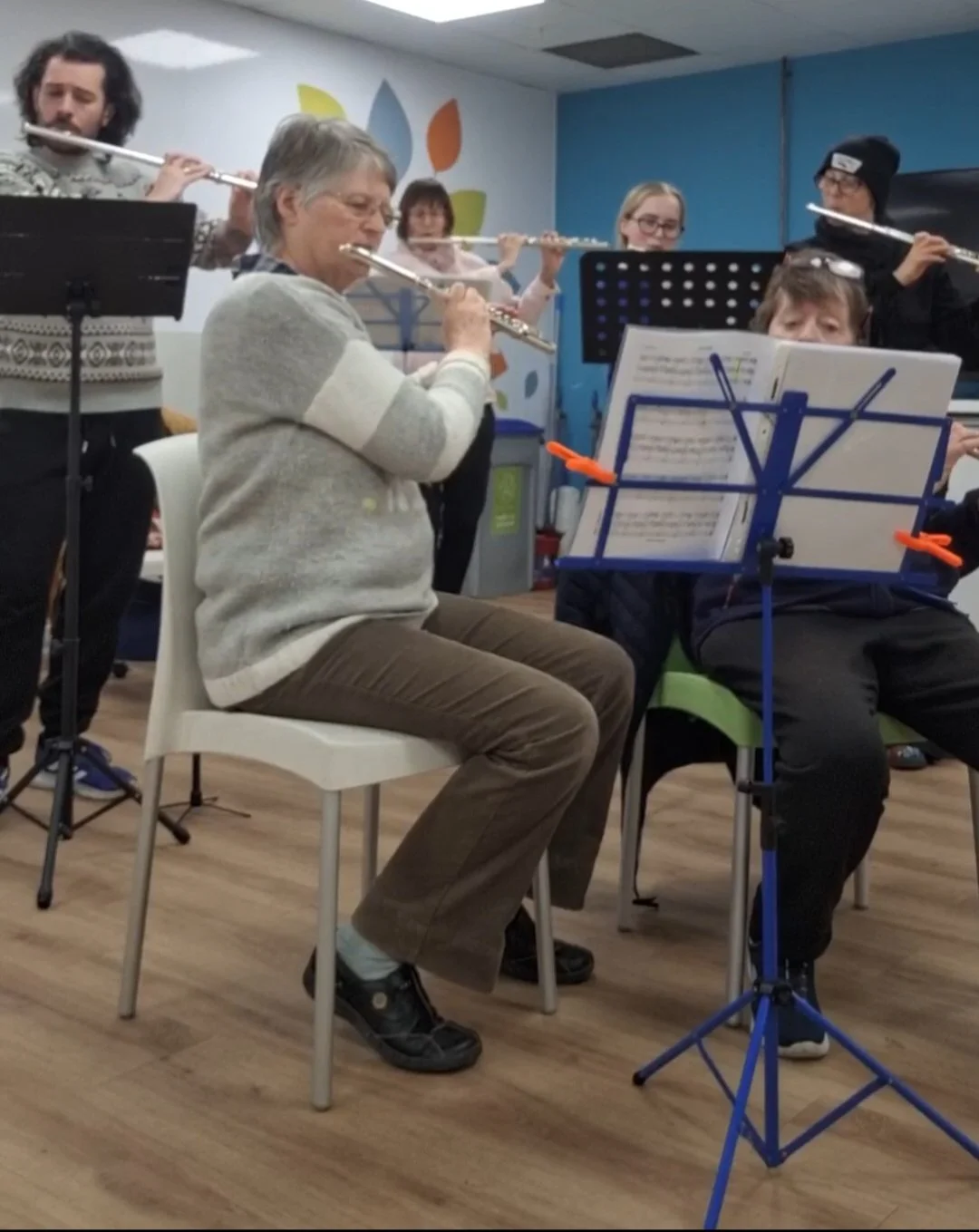
Come and join us!
We meet on the first Tuesday of each month in the Community Room of Tesco’s Extra on Lottbridge Drove, Eastbourne.
7-8pm for easier tunes (the more experienced players support those newer players)
8-9pm for a little more challenging ones
We welcome rusty and newer players. We do read music, but some copies have letter names to help.
We aspire to have fun, perfection can wait!
And we stop for a coffee break at half time, so anyone who wants to dip their toe for just the start is welcome.
Flute Tunes: The Ash Grove, Dance by Praetorius, Campton Races, Ode to Joy, Waltzing Matilda, Scotch Dance, Oh When The Saints, Minuet by Mozart and Skye Boat Song.
Canon: In drinking, Symphony by Purcell, Suburban Blues
Harder tunes: If I only had a brain, Raiders March, Sister Monica, Branle, Gavotte by Loeillet and Plaisir D’Amour.
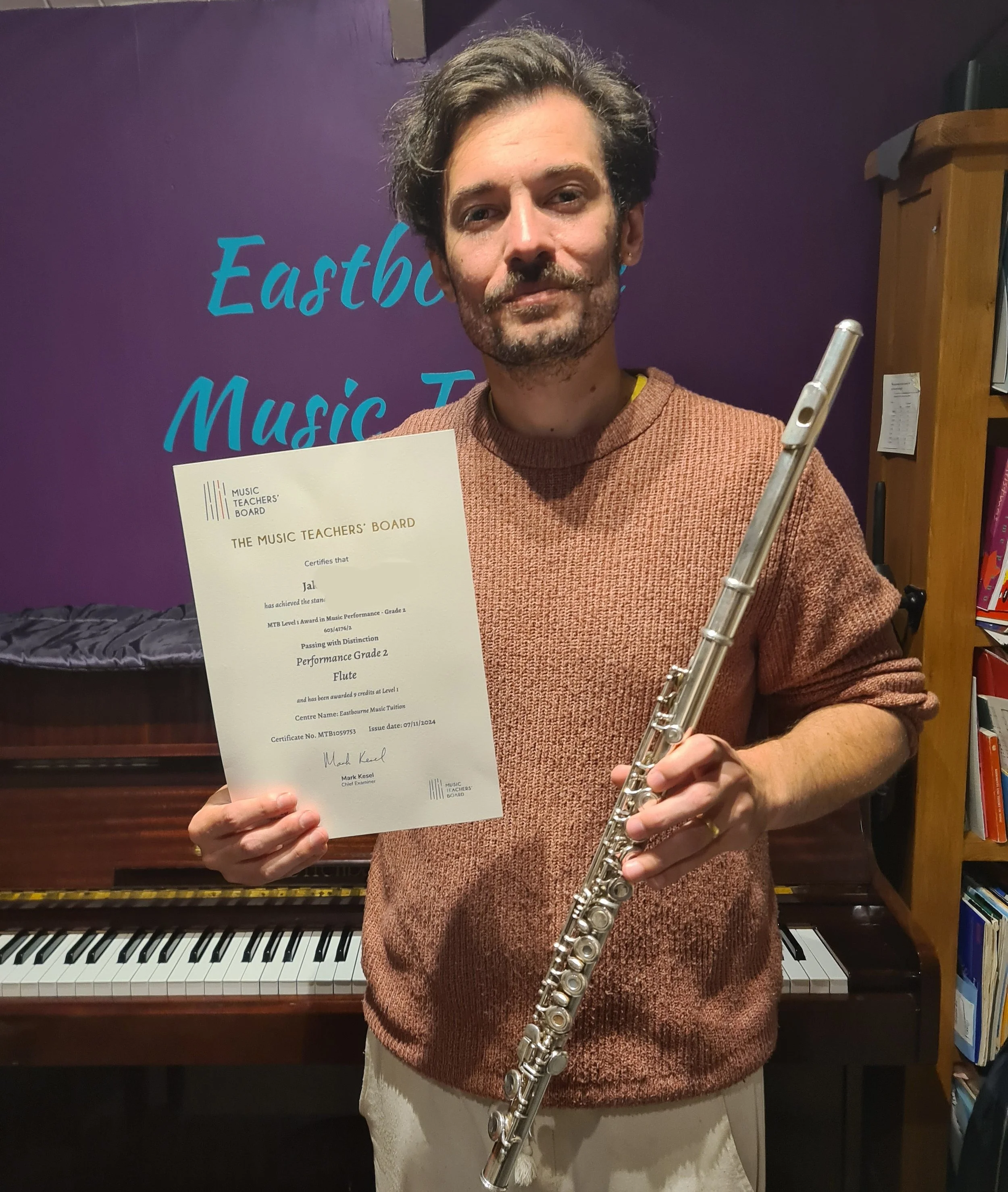
Eastbourne Flute Exam Centre - MTB and ABRSM
As a recognized exam centre for the MTB exam board, exams can be taken in our familiar music studio. I am also a flute teacher registered to prepare pupils for ABRSM flute exams and to record and submit video entries.
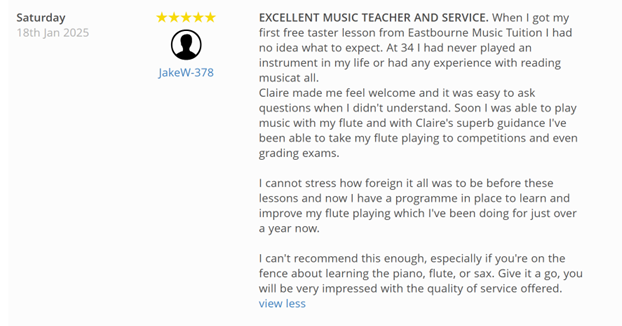
Festival and concerts performance opportunities
As well as the opportunity to play in our flute choir, you can join in the annual concert - which normally takes place in a local church in front of friends and family. Then for those interested there are Music and Arts Festivals. Some have travelled to Maidstone and Tunbridge Wells, but the most popular was the Eastbourne Arts Festival this year.
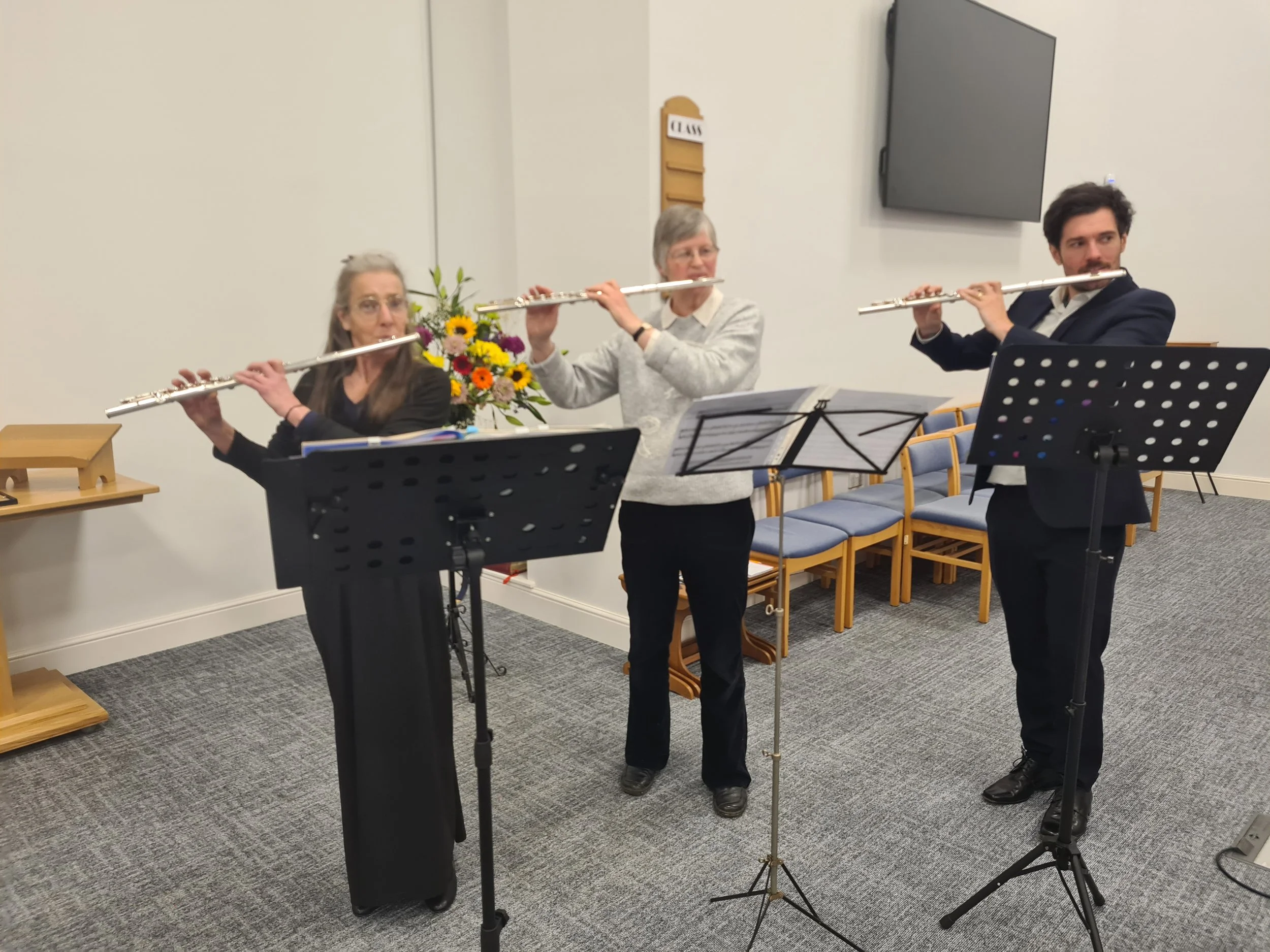
Annual concert flute trio performing
How young can pupils start?
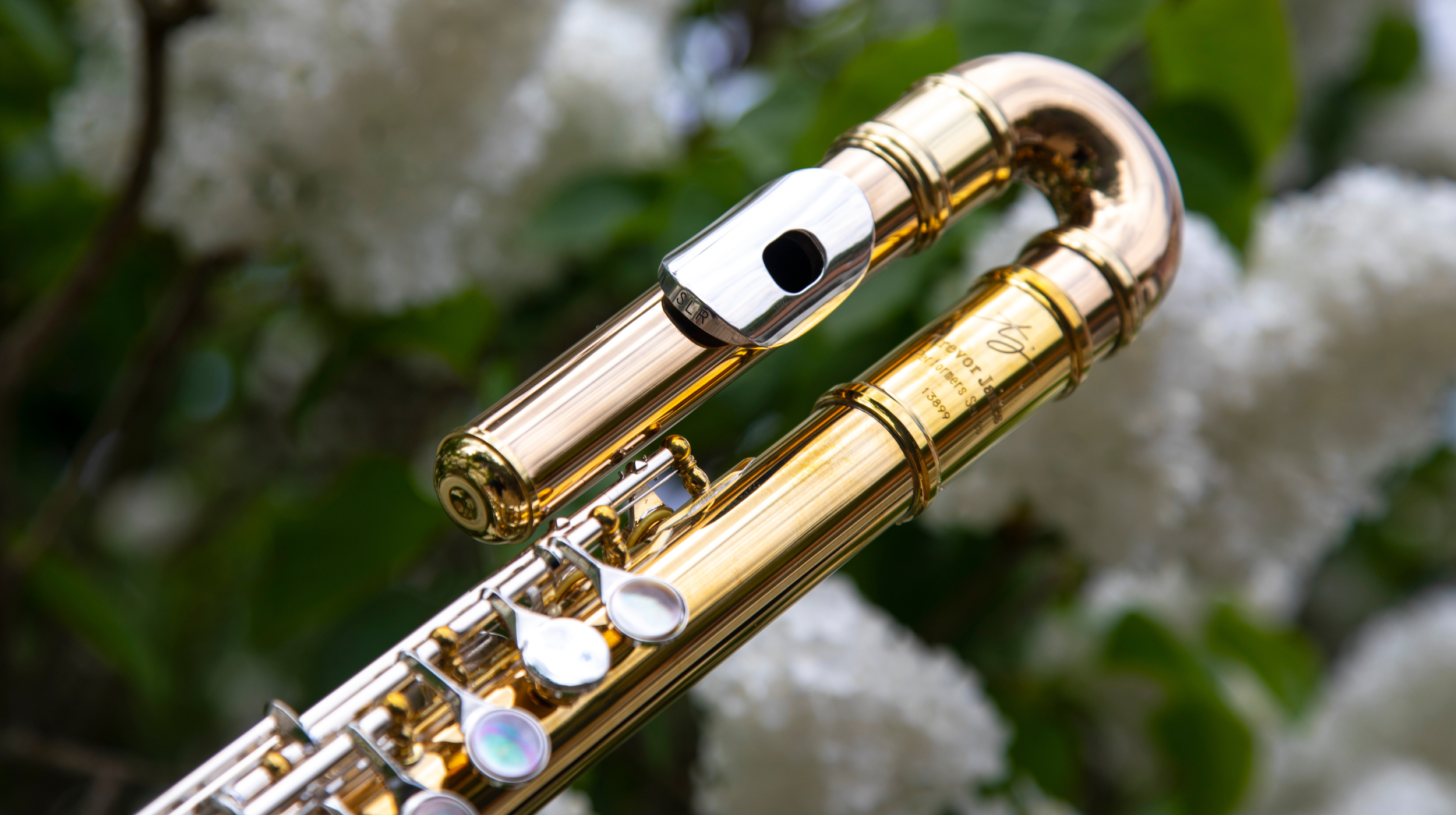
Students typically start the flute at around 9 to 11 years old, although it is possible to begin at a younger age. The typical C flute is made of three pieces, the headjoint, body joint, and footjoint. For smaller flutists there is curved head joint available to lessen the reach and therefore improve comfort when playing.
Tip: A good instrument to precede the flute is the recorder, as there is less difficulty in initially producing a sound and the student can begin to learn note fingerings which is easily transferred to the flute.
I started at the age of 11 having learnt recorder for a few years and the piano from the age of 6.
Flute Lesson FAQs
Q. Do I need my own flute?
A. Not at first. During the first lesson or two I can lend you a beginner flute to help you decide if it's the instrument for you. Hopefully, you will soon be eager to practise at home too and will need to buy a flute and I can give you some pointers to help you choose.
Q. What will we learn in lessons?
A. We build strong foundations in:
Breath control and tone production
Fingering and reading music
Listening
Confidence and expressive playing
Lessons are playful, structured, and progress at your pace